
How to Boost Your GPA in 2025: Step-by-Step Strategies and AI Tools for Students
Struggling with a low GPA?
You’re not alone—many students feel the pressure as deadlines for scholarships, internships, or graduation approach. The good news is that with targeted strategies, smarter habits, and the right tools, you can turn things around faster than you might expect. This comprehensive guide dives deep into proven methods to raise your GPA, drawing from expert advice and real student experiences. We’ll cover everything from assessing your current situation to leveraging modern AI study aids, all tailored for success in 2025.
Whether you’re in high school, college, or even post-grad looking to improve for future opportunities, these steps will help you study more efficiently, manage your time better, and achieve measurable results. Let’s get started—no fluff, just actionable insights to help you succeed.
1. Assess Your Current GPA and Set Realistic Goals
Before making changes, you need a clear picture of where you stand. Start by calculating your current GPA using your school’s portal or a reliable online calculator. Factor in how different courses weigh into your average—honors or AP classes might use a weighted scale up to 5.0, while standard ones stick to 4.0.
Once you have your baseline, set specific, achievable targets. For example, aim to raise your GPA from 2.5 to 3.0 by the end of the semester. Break it down: How many credits do you need to ace to hit that mark? Tools like GPA calculators can simulate scenarios, showing exactly what grades you’ll need in upcoming classes.
Pro tip: If your GPA is low due to past semesters, check your school’s policies on grade forgiveness or retakes—these can replace old grades entirely.
2. Identify What's Dragging Your GPA Down
Pinpoint the root causes to avoid repeating mistakes. Common culprits include poor time management, ineffective study methods, or simply overloading your schedule. Review your transcripts: Are low grades concentrated in certain subjects? Is procrastination leading to rushed assignments?
Be honest—track a typical week to see where time slips away. This self-audit helps you focus efforts where they’ll make the biggest impact, like prioritizing major-related courses that heavily influence your cumulative GPA.
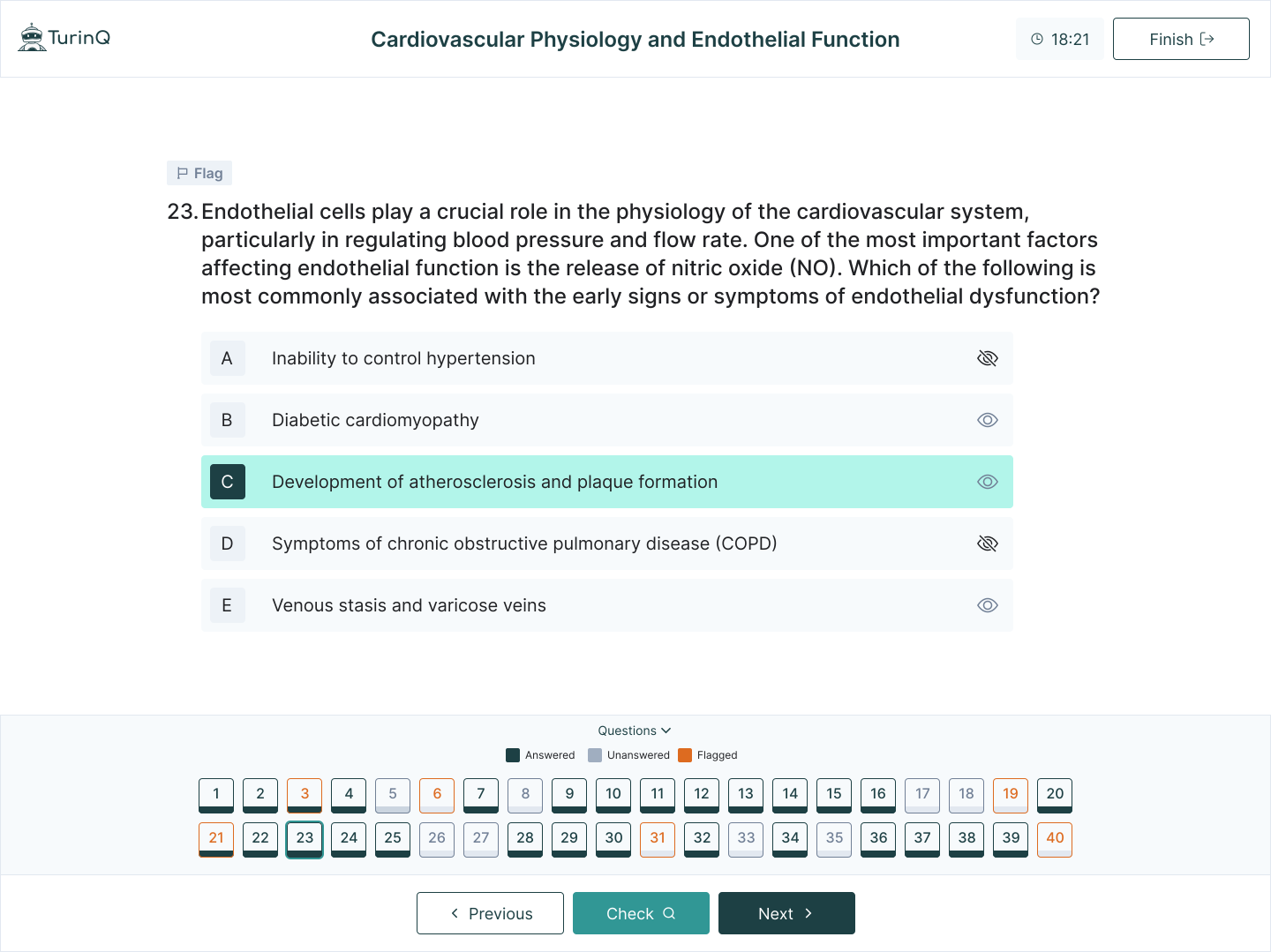
Boost Your GPA with TurinQ
Step into the future of learning with TurinQ – your AI-powered partner for limitless growth in teaching, learning, and self-assessment!
3. Build Smarter Study Habits for Better Retention
Raising your GPA isn’t about logging more hours; it’s about studying effectively. Shift from passive reading to active techniques like spaced repetition and self-quizzing, which improve long-term retention.
- Active Recall: Test yourself on material instead of re-reading notes. This strengthens memory and boosts exam performance.
- Pomodoro Technique: Study in 25-minute focused bursts with 5-minute breaks to maintain concentration without burnout.
- Summarize Key Concepts: Condense notes into your own words to reinforce understanding.
Incorporate AI tools to streamline this: Platforms can generate summaries from your uploads, turning dense textbooks into digestible overviews. For instance, using features that create personalized study aids helps you grasp main ideas quickly, freeing up time for deeper review.
4. Harness AI Tools to Slash Study Time and Increase Efficiency
In 2025, AI is a game-changer for students aiming to improve their GPA. These tools handle repetitive tasks, allowing you to focus on mastery.
Key ways AI can help:
- Automated Summaries: Upload notes or lectures for instant, concise breakdowns of complex topics.
- Custom Flashcards and Quizzes: Generate interactive cards and tests tailored to your material, complete with instant feedback and explanations.
- Personalized Questioning: Create quizzes aligned with learning levels, from basic recall to advanced analysis, to build critical thinking.
- AI Explanations: Get quick, context-specific answers when you’re stuck, reducing frustration and accelerating learning.
Tools like TurinQ.com offer features such as AI-powered quiz generators that adjust difficulty based on your needs, providing real-time grading and insights to target weak areas. This isn’t about shortcuts—it’s about efficient, science-backed learning that leads to higher grades.
5. Master Time Management to Stay Ahead
Effective time management separates average students from top performers. Use digital planners to track assignments, exams, and study sessions.
- Prioritize High-Impact Tasks: Tackle urgent or GPA-heavy items first.
- Break It Down: Divide big projects into smaller, daily goals to avoid cramming.
- Consistency Over Intensity: Short, regular sessions build habits and prevent overload.
Integrate AI for smarter scheduling: Some platforms suggest optimal study times based on your workload, helping you balance academics with rest.




6. Amp Up Class Participation and Engagement
Active involvement in class directly impacts your grades. Professors often factor in participation, which can nudge borderline scores upward.
- Prepare in Advance: Skim readings before class to contribute meaningfully.
- Ask Questions: Show engagement by seeking clarification— it aids understanding and builds rapport.
- Attend Office Hours: Regular check-ins can lead to valuable feedback and even grade boosts for effort.
This engagement not only improves retention but also makes learning more enjoyable, indirectly supporting your GPA goals.
7. Consider Retaking Courses Strategically
If specific low grades are weighing you down, retaking them can be a quick win. Many schools replace the original grade in your GPA calculation.
- Focus on courses that matter most to your major or overall average.
- Weigh the pros: A higher grade can significantly lift your cumulative GPA.
- Check policies: Some allow unlimited retakes, while others have limits.
This approach is especially useful post-graduation if you’re eyeing further education.
| LETTER GRADE | PERCENT GRADE | 4.0 SCALE |
|---|---|---|
| A+ | 97-100 | 4.0 |
| A | 93-96 | 4.0 |
| A- | 90-92 | 3.7 |
| B+ | 87-89 | 3.3 |
| B | 83-86 | 3.0 |
| B- | 80-82 | 2.7 |
| C+ | 77-79 | 2.3 |
| C | 73-76 | 2.0 |
| C- | 70-72 | 1.7 |
| D+ | 67-69 | 1.3 |
| D | 65-66 | 1.0 |
| E/F | Below 65 | 0.0 |
8. Tap Into Free Academic Resources
Don’t overlook readily available support to elevate your performance.
- Tutoring Services: School-provided sessions clarify tough subjects.
- Study Groups: Collaborate with peers for diverse perspectives and accountability.
- Online Aids: Use AI-driven tutorials for extra practice on challenging concepts.
- Professor Feedback: Apply suggestions from assignments to improve future work.
Combining these with digital tools, like platforms offering collaboration features for shared notes and group quizzes, amplifies their effectiveness.
9. Minimize Distractions and Build Discipline
Distractions kill productivity, so create a focused environment.
- Tech Blocks: Use apps to limit social media during study time.
- Dedicated Spaces: Study in quiet areas like libraries to enhance concentration.
- Routine Building: Establish daily habits, like fixed study hours, for long-term discipline.
AI features like distraction-free modes or study timers can enforce these boundaries, helping you stay on track.
10. Stay Motivated and Track Your Progress
Sustaining momentum is key to long-term GPA improvement. Set small milestones and celebrate achievements to keep motivation high.
- Visual Tracking: Use charts or apps to monitor grade improvements.
- Positive Reinforcement: Reward yourself for hitting targets, like a break after a strong quiz score.
- Mindset Shift: View setbacks as learning opportunities, not failures.
Remember, consistent effort compounds—many students see GPA gains in just one semester with these strategies.
Wrapping It Up: Your Path to a Higher GPA in 2025
Boosting your GPA requires strategy, not just hard work. By assessing your starting point, adopting efficient habits, and using tools like AI-powered summaries, quizzes, and flashcards, you can study smarter and see real results. Platforms with features for personalized learning, such as TurinQ.com‘s quiz generators and feedback systems, make the process even more effective without overwhelming you.
Start implementing these steps today, and you’ll not only raise your GPA but also build skills for lifelong success. You’ve got the tools—now go make it happen!
Frequently Asked Questions
Can I improve my GPA in one semester?
Yes, with focused strategies like prioritizing key classes and using efficient study tools.
How do AI tools help boost GPA?
They provide personalized quizzes, summaries, and explanations, making study time more effective.
Should I retake courses if my GPA is low?
Absolutely, especially for major-impacting classes where schools replace grades.
What's the best way to avoid cramming?
Use planners and spaced study sessions for consistent retention.
Why isn't studying more helping?
Switch to active methods like self-quizzing for better results over passive reading.
References
- https://www.indeed.com/career-advice/career-development/improve-your-gpa
- https://gpacalculator.net/how-to-raise-gpa/
- https://turinq.com/ai-study-guide-maker/
- https://www.indeed.com/career-advice/career-development/how-to-raise-your-gpa
- https://turinq.com/multiple-choice-question-generator/
- https://turinq.com/turbolearn-ai-free-alternative-6-reasons-why-turinq-com-is-the-ultimate-study-tool/
- https://www.coursera.org/articles/low-gpa
- https://savemygpa.com
- https://www.chesapeake.edu/students/academic/raise-my-gpa/
- https://www.linkedin.com/pulse/can-ai-tools-improve-student-gpa-wajahat-zafar-4nibe
- https://intellecs.ai/blog/evidence-based-study-methods-that-will-boost-your-gpa-this-semester
- https://www.reddit.com/r/GAMSAT/comments/180yf31/how_to_improve_gpa_after_graduation/
- https://www.youtube.com/watch?v=MICxcAh2fVQ
Table of Content
Recent Posts



Shapes Flashcards

Number Flashcards

Colors Flashcards
