
Spaced Repetition vs. Summaries: Study Smarter with TurinQ
Is Mindgrasp.ai Worth It in 2025? A Student-First Value Check (vs. TurinQ.com)
Summary
- Spaced Repetition (SRS) + active recall beats passive reading for long-term memory.
- Mindgrasp’s content strategy leans on broad, summary-style study aids; that’s fast but shallow for retention.
- TurinQ layers true SRS with Bloom-level quizzes and AI Insights so you can pinpoint gaps and master material, not just skim it.
What is Spaced Repetition (SRS)— and why does it work?
SRS schedules reviews just before you’re about to forget, turning short-term cram into long-term recall. Paired with active recall (testing yourself), it’s one of the most evidence-backed ways to lock knowledge into memory.
The “quick summary” trap
Mindgrasp’s top-of-funnel play pulls big traffic with broad academic questions and fast summaries. That’s efficient for skimming, but weakly connected to deep learning and product-driven outcomes; users get an answer and bounce without truly mastering the topic. Feature-wise, it emphasizes summarizing, note-taking, and simple quizzes—useful, yet not positioned as the indispensable path to course success.
TurinQ’s approach: SRS + Bloom + AI Insights (a mastery loop)
TurinQ is built for expertise, not just speed. It pushes beyond passive review: you can raise or lower cognitive difficulty with Bloom’s Taxonomy, auto-generate quizzes that test application/analysis—not just recall—and use AI Insights to reveal where you’re actually weak so you know exactly what to review next.
Why this matters for memory
Bloom-aligned prompts force deeper processing, which strengthens memory traces more than re-reading.
AI Insights highlights your personal knowledge gaps so your spaced reviews target what you don’t know (not what you already do).

Build a spaced-repetition workflow in TurinQ (step-by-step)
1) Import your sources
PDFs & lecture slides → Upload and auto-build a rich question bank from your notes/handouts—perfect fuel for SRS decks.
YouTube lectures → Turn videos into interactive notes and quizzes in seconds, then add those to your spaced-review queue.
2) Generate recall-first questions
Use TurinQ’s quiz generator to produce:
Recall-level items for definitions (good SRS starters).
Application & analysis items for worked problems and case prompts (what really cements memory).
3) Activate the SRS cycle
Schedule daily sessions. TurinQ will resurface items right before forgetting and increase or decrease intervals based on performance, while AI Insights keeps flagging weak areas to revisit.

Mindgrasp vs. TurinQ for spaced repetition
A 2-week SRS plan you can steal

Upload Your Study Contents
Select Mode to Proceed Further
Chat with AI Tutor and Advance Your Learning
Create AI Notes from Your Speeches and Sources
Day 1–2: Seed your deck
Upload your PDFs/slides and your must-watch YouTube lecture. Generate recall-level and application-level questions.
Day 3–7: Daily 20-minute reviews
Work only due cards. Promote Bloom levels (move from “define osmolarity” → “analyze this case’s electrolyte panel”).
Day 8–12: Insights-driven focus
Check AI Insights; branch new questions that target your weakest subtopics.
Day 13–14: Exam rehearsal
Run a mixed quiz with evaluation-level prompts and short answers; use AI grading feedback to polish final gaps.
Ready to remember more in less time?
Start with TurinQ for free today!
Ready to move from reading to mastery? Try TurinQ with your next chapter’s PDF or a YouTube lecture and feel the difference in one session.
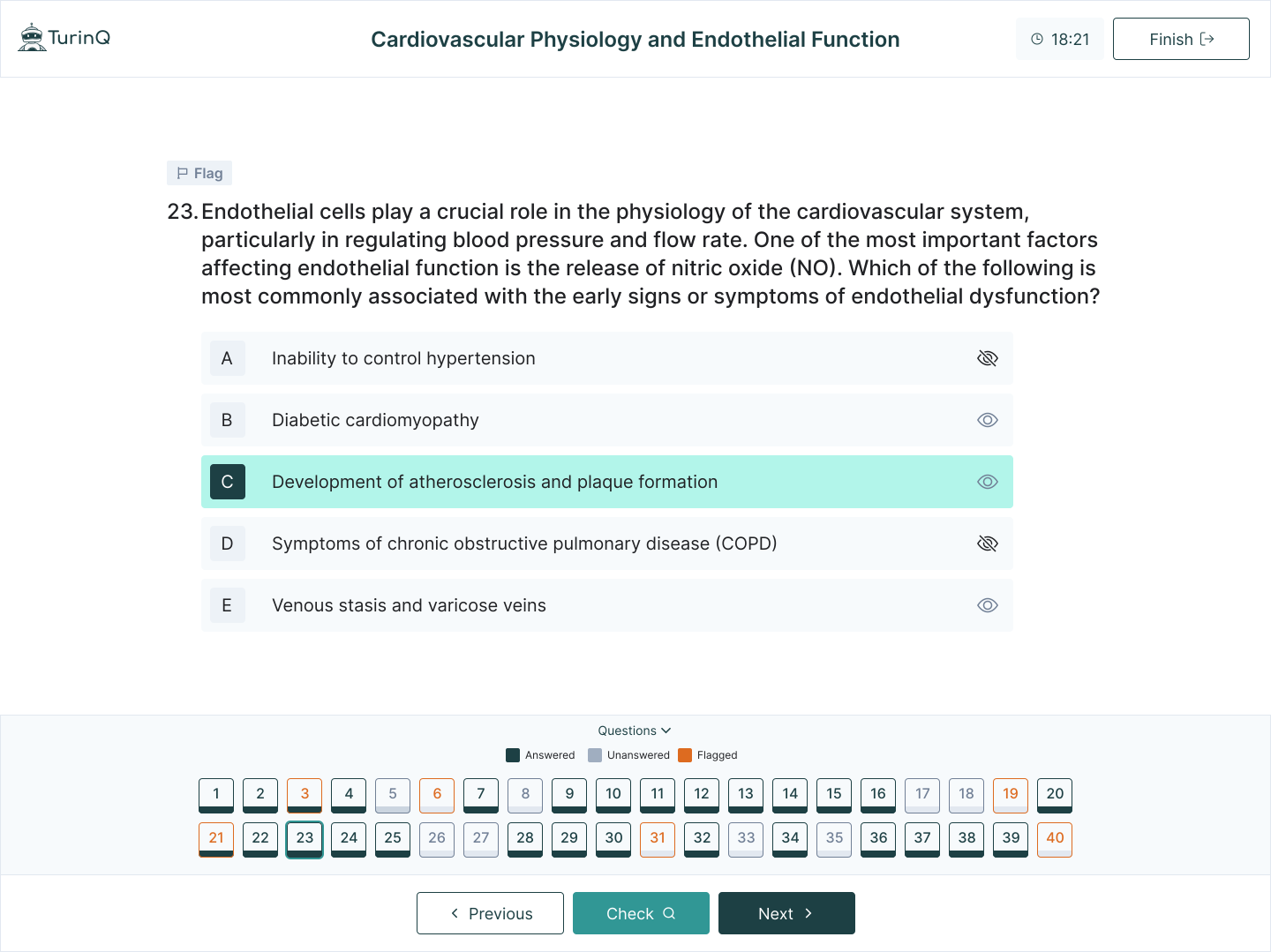
Spin up your first spaced-repetition deck in TurinQ from a PDF or a YouTube lecture, then let AI Insights tell you what to review next. (Related reads: Bloom Taxonomy Study Guide, YouTube → Quiz in Minutes, Build a Question Bank from PDFs.)
Frequently Asked Questions
Is spaced repetition only for flashcards?
No. Flashcards are common, but TurinQ’s Bloom-aligned open-ended items + AI grading make SRS effective for essays, labs, and case-based courses too.
Can I do this with just YouTube videos?
Yes—TurinQ converts lectures into notes and quizzes fast, then schedules them into your SRS queue.
What if I’m short on time?
That’s exactly when SRS shines—10–20 focused minutes daily beats last-minute marathons. Start with recall items, then mix in analysis prompts as you stabilize the basics.
I already use flashcards—why switch?
Because TurinQ’s SRS sits inside a full assessment engine, closing the loop between questions → feedback → targeted cards.
Table of Content
Recent Posts



Shapes Flashcards

Number Flashcards

Colors Flashcards
