
TurinQ AI Flashcards: Spaced Repetition, Leitner Method & Active Recall
How TurinQ Flashcards Transform Learning with Spaced Repetition, the Leitner Method, and Active Recall
Summary
Flashcards are no longer just simple study cards. With TurinQ, AI-powered flashcards combined with Spaced Repetition, the Leitner Method, and Active Recall create a smarter, science-backed way to learn faster and remember longer.
Why Flashcards Still Matter in Modern Learning
Despite advances in AI and digital learning, flashcards remain one of the most effective study tools. Research consistently shows that active engagement with information leads to better retention than passive reading or watching.
However, traditional flashcards have limitations:
No personalization
No adaptive scheduling
No feedback or explanations
This is where TurinQ AI Flashcards redefine the experience.
Active Recall: Learning by Retrieving, Not Rereading
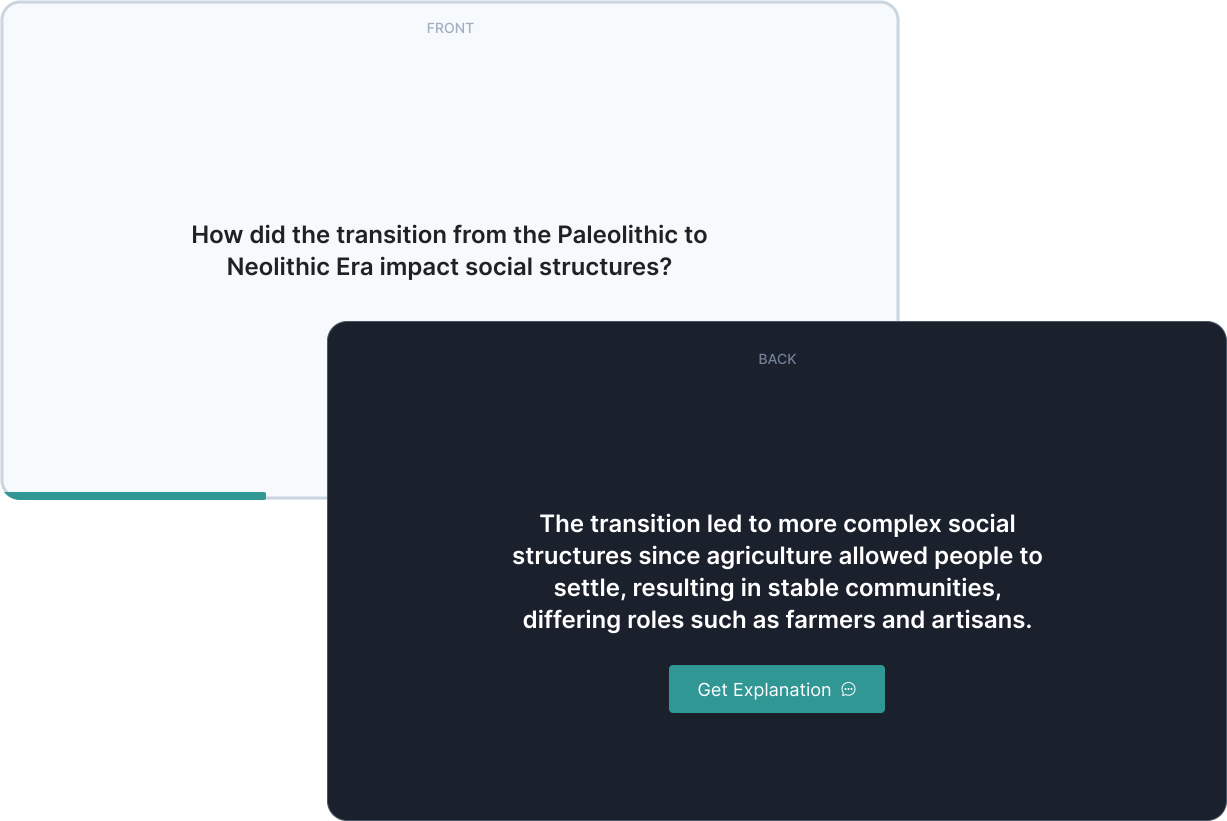
Active recall is the practice of forcing your brain to retrieve information instead of passively reviewing it.
TurinQ flashcards are designed around this principle:
Questions are generated directly from your notes, PDFs, or lectures
Cards prompt recall before revealing answers
AI explanations help reinforce understanding after each attempt
This turns every study session into an active learning experience.
Spaced Repetition: Study Less, Remember More
Spaced repetition optimizes when you review information. Instead of cramming, TurinQ schedules flashcards so that:
Easy cards appear less often
Difficult cards return more frequently
Reviews happen just before you’re likely to forget
TurinQ automates this process using AI—no manual planning required.
The Leitner Method, Reinvented with AI
The Leitner Method organizes flashcards into levels based on how well you know them.
With TurinQ:
Cards you answer correctly move forward
Cards you struggle with are reviewed sooner
Progress adapts automatically to your performance
This ensures your time is spent where it matters most.
What Makes TurinQ Flashcards Different
Unlike basic flashcard apps, TurinQ offers:
Spaced repetition and Leitner-based memorization
Multiple flashcard types (standard, bullet-point, fill-in-the-blanks)
AI explanations for deeper understanding
Mobile-friendly study sessions
Integration with quizzes and AI Study tools
Everything works together in one platform—no switching between apps.
Who Benefits Most from TurinQ Flashcards?
Students preparing for exams and finals
Self-learners mastering new skills
Teachers creating structured revision materials
Professionals studying for certifications
Whether you’re reviewing one chapter or an entire course, TurinQ adapts to your learning pace.
The Smarter Way to Chat with Your Notes
Ready to bring AI-powered question creation into your teaching workflow?

If your goal is exam preparation, interactive learning, or AI-driven feedback, TurinQ is the most comprehensive option among modern AI study tools.
Final Verdict
Flashcards are most effective when combined with the right learning science. By uniting Active Recall, Spaced Repetition, and the Leitner Method, TurinQ transforms flashcards into a powerful AI-driven learning system—built for long-term retention, not short-term memorization.
Frequently Asked Questions
What is spaced repetition in TurinQ?
Spaced repetition in TurinQ schedules flashcards based on your performance, showing cards at optimal intervals to maximize memory retention.
Does TurinQ use the Leitner Method?
Yes. TurinQ applies Leitner-based progression automatically, moving cards through different review stages depending on how well you answer them.
How does active recall work with TurinQ flashcards?
TurinQ flashcards prompt you to recall answers before revealing them, reinforcing learning through retrieval practice instead of passive review.
Can I create flashcards from my own content?
Absolutely. TurinQ generates AI flashcards from PDFs, slides, notes, videos, audio files, and web pages.
Is TurinQ suitable for self-learners?
Yes. TurinQ is designed for independent study, exam preparation, and long-term knowledge retention.
Table of Content
Recent Posts



Shapes Flashcards

Number Flashcards

Colors Flashcards
