
AI Grading for Open-Ended Questions: Mindgrasp vs TurinQ
AI Grading for Open-Ended Questions: Objective, Fast, and Fair (Mindgrasp vs. TurinQ.com)
Summary
- Many study tools stop at summaries; they don’t help you write better answers—or grade them. Mindgrasp’s strategy focuses on quick takeaways rather than deep assessment.
- TurinQ.com supports open-ended questions with AI that evaluates semantic quality and delivers personalized feedback, tying results to Bloom levels and analytics.
- Result: faster, more objective scoring and actionable comments—so you can improve reasoning, not just memorize.
Why open-ended answers need more than a summary
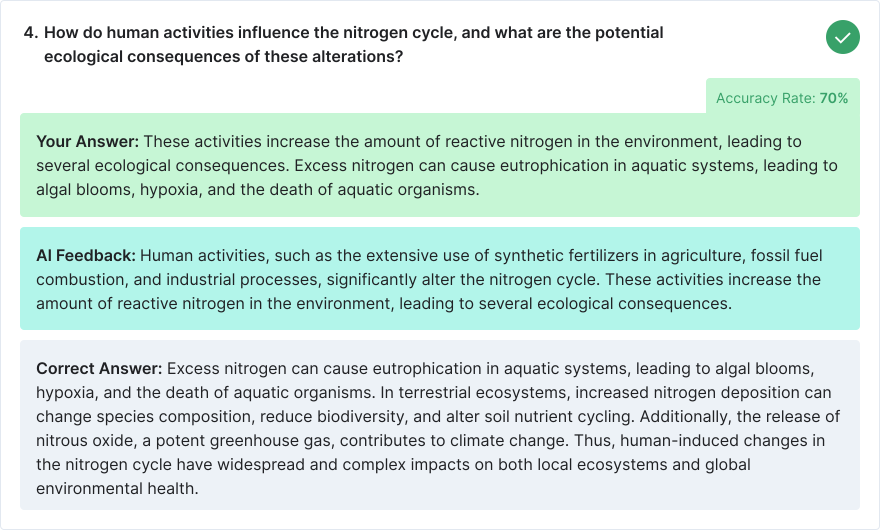
What TurinQ’s AI grading actually does
TurinQ is positioned as an assessment engine, not just a note tool. For open-ended responses it:
Scores with semantic analysis aligned to the intent of the prompt.
Gives targeted, personalized feedback you can act on immediately.
Fits inside a mastery loop (Bloom levels → practice → feedback → AI Insights highlight gaps).
Example from our plan: after generating case-style items at Application and Analysis levels, TurinQ’s AI grading pinpoints that you’re strong at analysis but weak at application, telling you exactly where to focus.

Mindgrasp vs. TurinQ: open-ended performance

10-minute workflow: grade a short answer like an examiner
- Create the prompt at Application or Analysis level from your PDF/notes (or a YouTube lecture).
Write a 4–6 sentence answer under exam time pressure.
Run AI grading in TurinQ to get semantic feedback (missing criteria, weak evidence, unclear logic).
- Revise once, then generate a contrast prompt (e.g., compare two mechanisms) to stress-test reasoning at Evaluation level.
- Add weak areas to your next practice via AI Insights and spaced review.
Where the data comes from (and why it’s fair)
Open-ended grading works when the system knows what “good” looks like. TurinQ’s approach keeps assessment tied to your actual materials—PDFs, slides, web pages, or even lecture videos—so feedback reflects the course’s definitions/criteria, not generic internet takes.
Students: when to use this (and when not to)
Educators: a side benefit
Ready to learn with your videos, not just watch them?
Start with TurinQ for free today!
Ready to move from reading to mastery? Try TurinQ with your next chapter’s PDF or a YouTube lecture and feel the difference in one session.
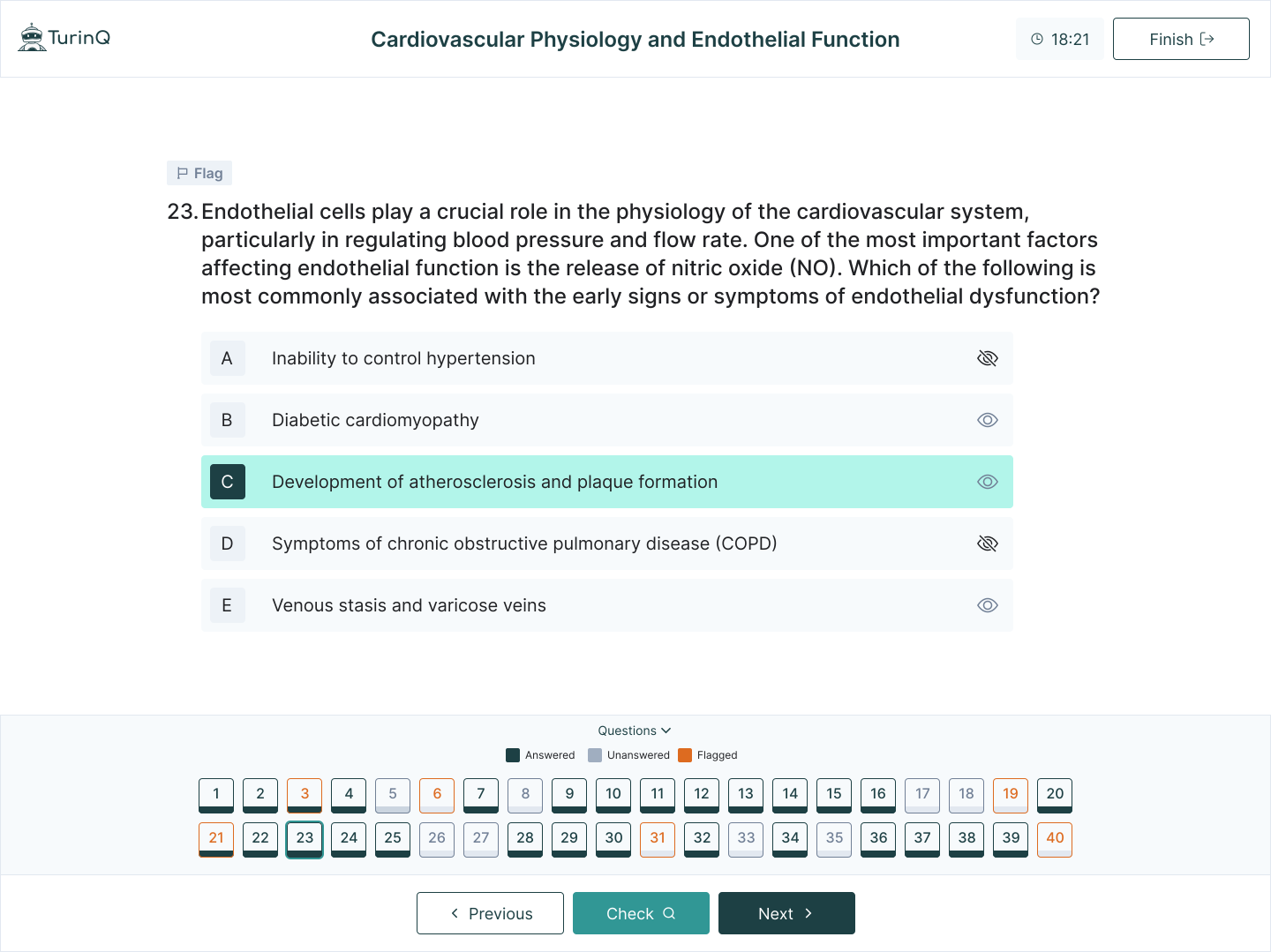
Open-ended answers decide grades. Tools that stop at summaries can’t coach your reasoning. By pairing AI grading with Bloom-aligned prompts and gap-finding analytics, TurinQ.com helps you think better—and prove it.
Frequently Asked Questions
Can TurinQ grade long essays?
Short and medium open-ended responses receive semantic feedback; use them as iterative drafts before a longer submission.
What if my course uses videos heavily?
Build prompts from YouTube lectures and run AI grading on your explanations—grounded in what your instructor actually covered.
How do I know I’m improving?
AI Insights track pattern-level weaknesses (e.g., great at analysis, weak at application) so your next practice isn’t guesswork.
Table of Content
Recent Posts



Shapes Flashcards

Number Flashcards

Colors Flashcards
