
Why Cramming Fails: Win Exams with Spaced Repetition
Why Cramming Fails: Win Exams with Spaced Repetition
Active recall and spaced repetition are powerful, evidence-based learning techniques that transform how medical students retain vast amounts of complex information, shifting from passive reading to strategic memory retrieval at increasing time intervals for significantly improved long-term retention and exam performance.
Memory Burden Reality
Medical students face an enormous memorization burden, with the average student expected to learn approximately 10,000 new terms and concepts during their first year alone. This cognitive load often leads to stress and anxiety, particularly when preparing for high-stakes examinations like the USMLE Step 1. Research shows that traditional closed-book exams typically increase student stress levels, with 59.69% of students reporting that open-book alternatives are significantly less stressful. The pressure to retain vast amounts of biomedical knowledge is not just emotionally taxing but also impacts learning strategies—many students resort to cramming rather than developing deeper understanding. Interestingly, studies demonstrate that students who retain a higher percentage of foundational material over time (10+ months) perform better on licensing examinations, highlighting the importance of effective long-term memory strategies rather than short-term memorization.
The way students prepare for assessments significantly impacts both their performance and well-being. Self-directed retrieval practice has emerged as a powerful predictor of licensing examination success, with research showing that each additional 445 practice questions or 1,700 unique flashcards correlates with an additional point on Step 1 scores. Students increasingly utilize specialized tools like Anki (31% of students) and Firecracker (49% of students) to implement spaced repetition, moving beyond passive review methods. However, many medical schools still rely heavily on multiple-choice questions that may encourage memorization over conceptual understanding, despite evidence suggesting that varied assessment methods better prepare students for clinical practice. This disconnect between assessment methods and optimal learning strategies represents a significant challenge in medical education.
Feynman Technique Implementation

The Feynman Technique: Step-by-Step Implementation
The Feynman Technique consists of four straightforward steps that medical students can implement immediately:
Step 1: Choose a concept – Select a specific medical concept you want to master and write it at the top of a blank page. For example, instead of tackling “cardiology,” narrow it down to “the cardiac conduction system.”
Step 2: Teach it simply – Explain the concept as if teaching it to a 12-year-old or someone with no medical background. This forces you to translate complex terminology into plain language, revealing your true level of understanding.
Step 3: Identify knowledge gaps – Note areas where you struggled to explain clearly or relied on jargon. These represent gaps in your understanding that require further study.
Step 4: Simplify and refine – Return to your sources, fill the knowledge gaps, then simplify your explanation further. Create analogies that make the concept intuitive and obvious, which indicates mastery of the material.
For medical students specifically, implementing this technique with anatomical models, whiteboards, or study groups can enhance its effectiveness. The process builds neural pathways that make connecting complex medical concepts easier over time.
Flashcard Creation Strategies
Creating effective flashcards is crucial for medical students to optimize their study efficiency. The most successful flashcards follow these key principles:
One concept per card – Each flashcard should focus on a single concept or fact to facilitate efficient review and targeted knowledge testing. This prevents cognitive overload and makes retrieval practice more effective.
Incorporate visuals – Adding diagrams, charts, or images helps reinforce complex information and enhances memory retention, especially for anatomical structures and physiological processes.
Focus on high-yield material – Prioritize concepts and facts that are frequently tested or clinically relevant rather than trying to capture everything. Resources like “First Aid for the USMLE Step 1” can help identify high-yield topics.
Use active recall formatting – Structure cards as questions that force you to retrieve information rather than simply recognize it. This strengthens neural pathways and improves long-term retention compared to passive review.
Organize systematically – Categorize flashcards by subject or system (cardiovascular, respiratory, etc.) to streamline study sessions and ensure comprehensive coverage. Digital platforms like Anki support hierarchical organization while implementing spaced repetition algorithms to optimize review timing.
TurinQ AI Flashcard Maker: Transforming Medical Study
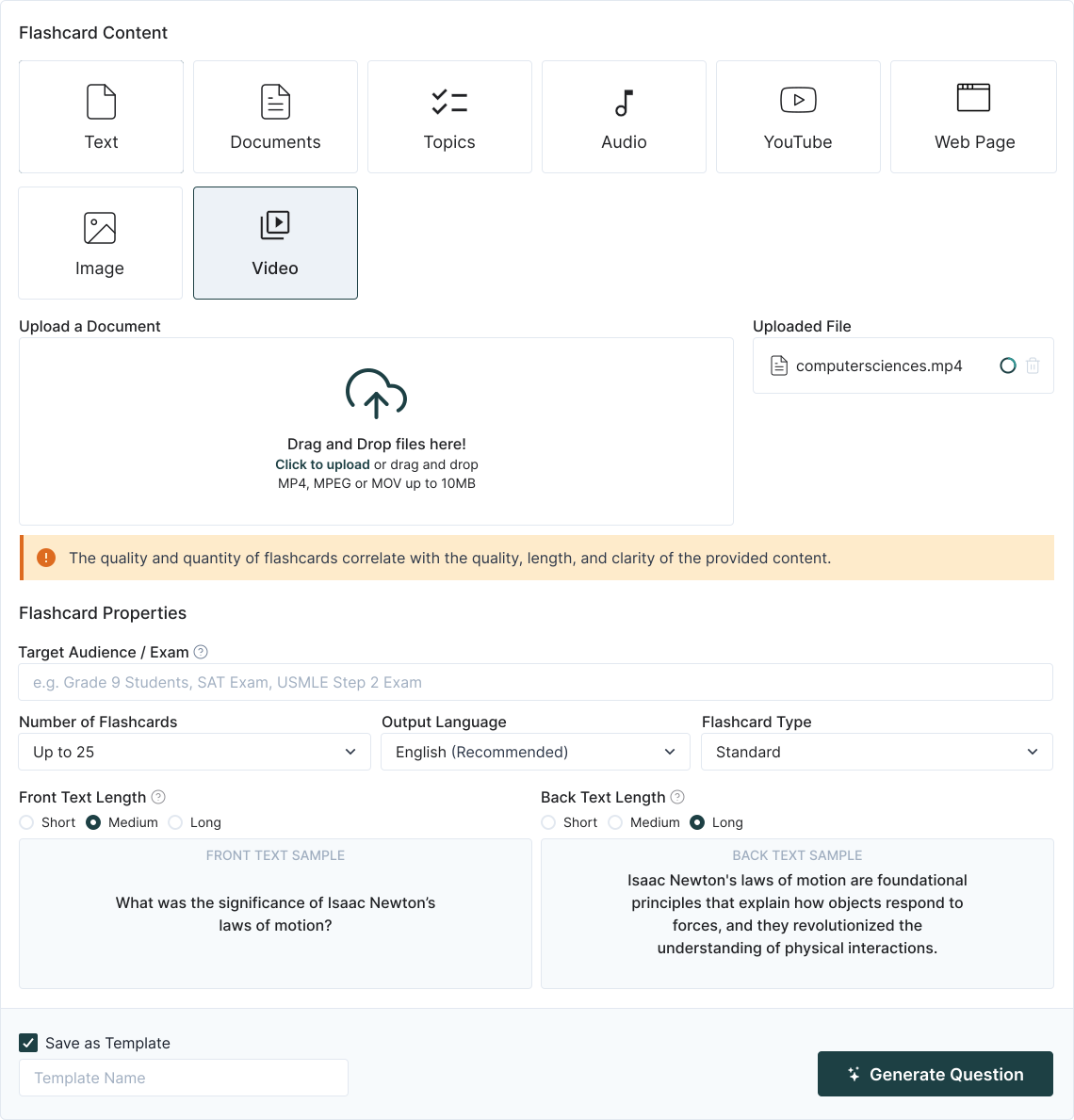
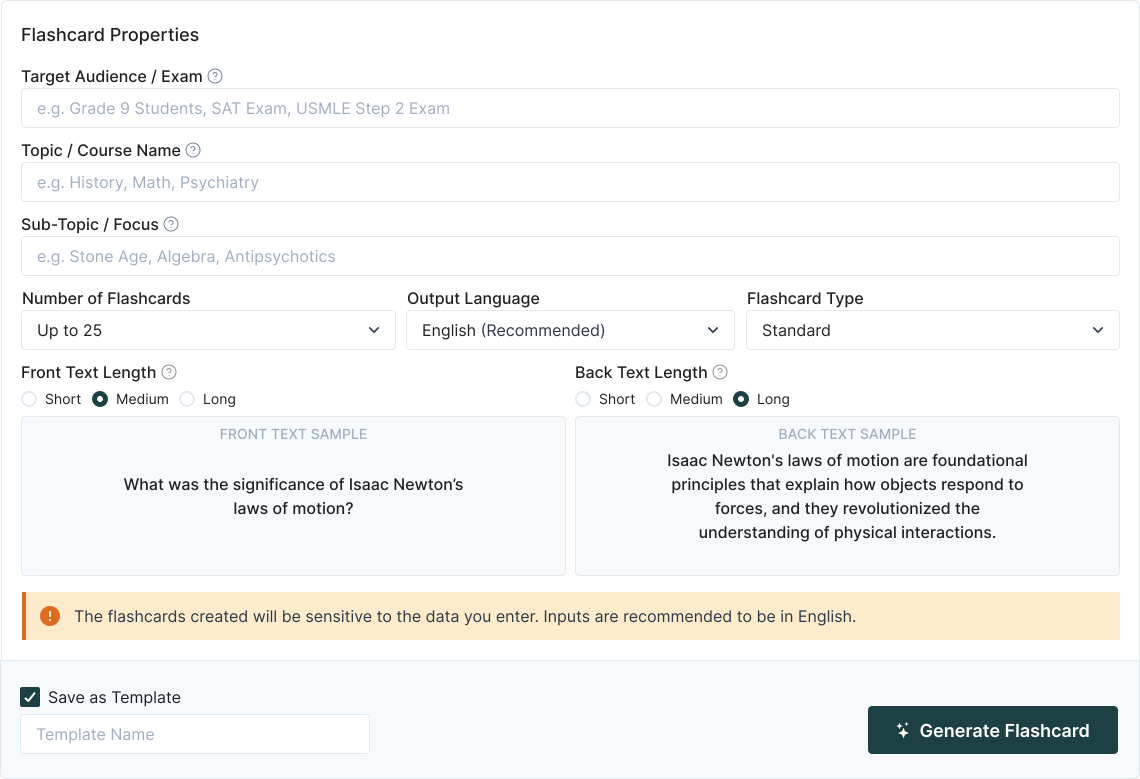
TurinQ offers an AI-powered flashcard generator that perfectly complements active recall and spaced repetition techniques for medical students. The platform transforms various content types—including PDFs, PowerPoint presentations, and even YouTube videos—into customized flashcards within seconds. Medical students can upload lecture notes or textbook chapters and instantly generate targeted study materials without manual creation, saving precious study time.
The system incorporates intelligent spaced repetition algorithms based on Ebbinghaus’ forgetting curve, prioritizing difficult concepts while spacing out mastered material for optimal long-term retention. What sets TurinQ apart is its customization capabilities—users can modify flashcard content, adjust topics, and refine keywords to match specific learning needs. Real-world success stories demonstrate its effectiveness, with medical students reporting significant improvements in retention rates for complex anatomy and pharmacology terms through consistent use of the platform’s AI-generated flashcards.
Memory Challenge Solution
Medical students face a staggering memorization challenge, with the average student needing to learn approximately 30,000 new terms by graduation—equivalent to ten new words daily. This overwhelming information volume represents one of the most significant hurdles in medical education, with studies showing considerable knowledge loss over time. Research demonstrates that students lose between 13-46% of their knowledge within just 10-11 months after course completion, with subjects like neuroanatomy showing particularly steep declines.
TurinQ’s AI flashcard maker directly addresses this memory burden by transforming passive learning into active recall through automated flashcard creation. The platform tackles key memorization obstacles including information overload, lack of context, and inefficient study methods.3 By implementing proven memory-enhancing techniques like spaced repetition and active learning, TurinQ helps medical students overcome the “70% memorization” reality of medical education. The system’s ability to convert complex course materials into targeted, high-yield flashcards provides a practical solution for students struggling with retention, allowing them to focus on understanding concepts rather than just memorizing facts—ultimately transforming one of medical education’s greatest challenges into a manageable learning process.
Frequently Asked Questions
How long should I spend on active recall sessions?
Quality trumps quantity with active recall. Aim for focused 20-30 minute sessions rather than marathon study periods. Research shows that shorter, more intense retrieval practice sessions yield better retention than extended passive review.
Can I use spaced repetition for clinical skills, not just facts?
Absolutely! Spaced repetition works excellently for procedural knowledge. Create flashcards with clinical scenarios that prompt you to recall diagnostic steps or treatment algorithms. Medical students report higher retention of clinical problem-solving skills when using spaced repetition for case-based learning.
Is cramming ever appropriate with these methods?
While cramming is generally ineffective for long-term retention, strategic last-minute review of already-learned material can help with immediate recall. However, this should supplement—never replace—a consistent spaced repetition schedule. Studies show that students who rely primarily on spaced repetition outperform crammers on licensing exams.
How do I know if my intervals are optimal?
The ideal spacing follows the “forgetting curve”—reviewing information just before you’re likely to forget it. Most digital flashcard systems automatically optimize intervals, but for manual systems, follow the 2-3-5-7 method: review after 2 days, then 3 days, 5 days, and 7 days. Adjust based on your performance—shorter intervals for challenging concepts, longer for mastered material.
Can these techniques help with understanding concepts, not just memorization?
Yes! Active recall forces you to articulate concepts in your own words, revealing understanding gaps. Combine with the Feynman Technique by explaining complex medical concepts simply, which deepens comprehension while strengthening memory. This approach transforms these methods from mere memorization tools into powerful conceptual learning strategies.
How do I create my own flashcards?
You can upload your content (e.g., text, PDFs, videos, audio, or URLs) or use smart generated into the platform. The AI then generates flashcards by summarizing key concepts and converting them into question-and-answer format.
Can I customize the generated flashcards?
Yes, you can easily customize the flashcards by editing the questions, answers, and even adding new flashcards. You can also adjust settings like theme (Light/Dark), flashcard mode (Standard/Memorize), and duration for a personalized study experience.
What is Spaced Repetition in AI Flashcards?
Spaced Repetition is a learning technique that schedules flashcard reviews at increasing intervals, based on your performance. The AI prioritizes cards you struggle with and gradually spaces out the review of cards you’ve mastered, helping you retain information for the long term.
References
Memory Burden Reality
Feynman Technique
https://www.k-state.edu/aac/success-tools/collection/Feynman_Technique.pdf
https://subjectguides.york.ac.uk/study-revision/feynman-technique
https://sks.uskudar.edu.tr/en/what-is-the-feynman-technique-how-is-it-applied
https://www.linkedin.com/pulse/feynman-technique-4-step-framework-learning-anything-field-enuh
Flashcard Creation Strategies
https://www.decodemed.app/blog/best-flashcards-for-medical-students
https://www.onlinemeded.com/blog/medical-terminology-flashcards
https://med.virginia.edu/faculty-affairs/wp-content/uploads/sites/458/2016/04/2012-2-14.pdf
TurinQ AI Flashcard Maker Spaced Repetition
Memory Challenge Solution
https://coursegate.co.uk/4-challenges-medical-students-face-and-how-to-encounter-them/
https://www.alphaacademy.org/10-challenges-medical-students-face-and-how-to-deal-with-them/
https://www.sciencedirect.com/science/article/abs/pii/S2211949317300273
https://conferences.cihanuniversity.edu.iq/index.php/BIOS/BIOHS2024/paper/download/1443/607
https://irisreading.com/is-medical-school-just-memorization/
https://kevinmd.com/2016/07/rude-awakening-many-medical-students.html
https://phys.org/news/2024-05-generation-medical-students-unique.html
Table of Content
Recent Posts



Shapes Flashcards

Number Flashcards

Colors Flashcards
