
Handwritten Notes to Quiz: The Mindgrasp Alternative (2025)
Handwritten Notes → Quizzes & Study Sets: The Best Mindgrasp Alternative for Pen-and-Paper Learners
Summary
- Mindgrasp focuses on short summaries and key takeaways—great for quick orientation, but thin for pen-and-paper workflows.
- TurinQ.com turns images of your handwritten pages into interactive study sets—quizzes, summaries, and OCR’d notes you can actually drill.
- Bonus: raise difficulty with Bloom levels and build lasting recall with spaced review—so handwritten ideas become exam-ready knowledge.
Why summary tools struggle with handwriting
Summary-first platforms are optimized for quick skims and broad “how school works” queries. That pulls traffic, but rarely captures the raw, messy learning that happens in notebooks—diagrams, derivations, side comments, and instructor doodles. You end up re-typing or skipping practice altogether.
TurinQ’s advantage: from notebook photos to active practice
TurinQ is built to ingest your handwritten notes and immediately output quizzes, concise guides, and editable text—no copy-pasting marathons. Snap pages, then watch AI structure them into the exact study surfaces you need.
Why this matters: once your handwriting is digital and structured, you can ratchet up challenge by Bloom’s levels (understand → apply → analyze → evaluate) and convert weak spots into review loops that stick.
7-minute workflow: Handwritten page → exam-style mastery
- Snap your pages (clear, edge-to-edge). Import the images into TurinQ.
- Auto-build a study set: OCR → summary + quiz seeds (MCQ/short-answer) you can edit.
- Dial Bloom level: promote a couple of items from recall to application/analysis.
Quick attempt (5 items): identify weak terms or steps you consistently miss.
Spin a mini deck: convert misses into a targeted review list for spaced practice (daily 10–15 min).
Repeat tomorrow: add the next page set; keep the loop small and surgical.

7-minute workflow: Handwritten page → exam-style mastery
- Create the prompt at Application or Analysis level from your PDF/notes (or a YouTube lecture).
Write a 4–6 sentence answer under exam time pressure.
Run AI grading in TurinQ to get semantic feedback (missing criteria, weak evidence, unclear logic).
- Revise once, then generate a contrast prompt (e.g., compare two mechanisms) to stress-test reasoning at Evaluation level.
- Add weak areas to your next practice via AI Insights and spaced review.
Mindgrasp vs. TurinQ for handwritten notes
What you need | Mindgrasp (summary-first) | TurinQ (assessment-first) |
Input: handwriting/photos | Not a core flow | |
From notes to practice | Orientation via takeaways | Quizzes + study guides from your notebook content |
Depth control | Light emphasis | Bloom-aligned difficulty controls |
Outcome | “I skimmed my notes.” | “I can apply what’s in my notes under exam pressure.” |
Tips for cleaner results (fast wins)
- Shoot flat & bright: avoid shadows; fill the frame so OCR is crisp.
One concept per card: when you edit, split multi-step ideas into 2–3 prompts; they’re easier to retain.
- Promote by Bloom: once recall is stable, rewrite stems to apply/analyze—that’s where grades move.
Student example: circuits notebook → problem-solving
Before: scattered KCL/KVL scribbles, arrows, margin algebra.
After in TurinQ: images become OCR’d notes and a mixed quiz; two items promoted to analysis-level word problems. Next day, you only review the missed items as a tight set—no re-typing.
Ready to turn your notebook into a study engine?
Start with TurinQ for free today!
Ready to move from reading to mastery? Try TurinQ with your handwritten notes lecture and feel the difference in one session.
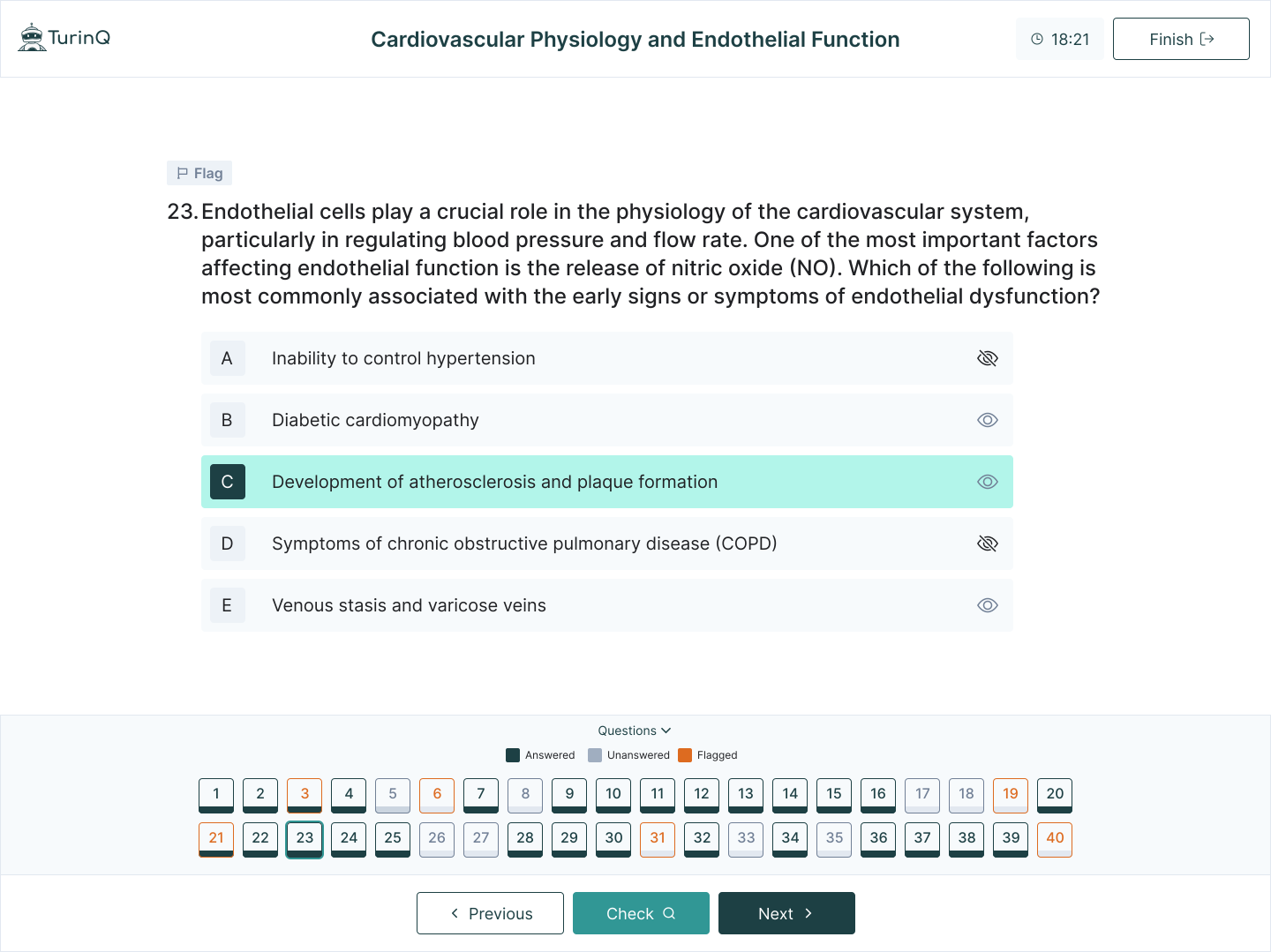
Import two pages today. In under ten minutes, you’ll have OCR’d notes + a first quiz and a small review deck to protect the gains you make tomorrow.
Frequently Asked Questions
Does this work for diagrams and equations?
Yes—photograph clearly; you can keep equations as images and pair them with application prompts you’ll actually drill.
Can I combine pages with slides or PDFs later?
Absolutely—handwriting is one input among many; the goal is a unified question bank you can reuse all term.
Isn’t a summary enough?
Useful to orient, but mastery needs assessment and iteration—that’s where Bloom control and targeted practice change outcomes.
Table of Content
Recent Posts



Shapes Flashcards

Number Flashcards

Colors Flashcards
