
TurinQ vs. ChatGPT: The Better AI Exam Generator for Educators
Can ChatGPT Create Fair, High-Quality Exams? TurinQ vs. ChatGPT for Educators
Summary
ChatGPT is a powerful, general-purpose AI that can draft questions fast—but it isn’t built for pedagogy or item quality control.
TurinQ is an assessment-first platform: it aligns items to Bloom’s Taxonomy, generates multi-format questions from your own materials, supports AI-assisted grading, delivers item analytics/AI Insights, and exports to your LMS—reducing busywork while improving validity.
Why this comparison matters (for teachers & professors)
If you’ve tried ChatGPT to “make a quiz on Chapter 7,” you know it’s fast—but speed without structure can backfire: uneven difficulty, misalignment with outcomes, or questions that don’t map to the cognitive depth you intend. The right tool should help you measure thinking, not only memorization. The content plan guiding TurinQ centers on deeper learning and measurable outcomes, not just time-saving summaries.
TurinQ vs. ChatGPT at a glance
Capability | ChatGPT (general model) | TurinQ (assessment-first) |
Pedagogical alignment | No native Bloom controls | Targets Bloom levels to tune cognitive depth (Remember → Evaluate/Create) |
Grounding in your course content | Can reference pasted text but prone to drift | Generates questions directly from your PDFs, slides, and notes to stay on-syllabus |
Question formats | Mostly text Q&A | MCQ, T/F, short-answer, case-based, matching, fill-in-the-blank, etc. |
Open-ended grading | Manual or ad-hoc rubrics | |
Quality feedback & analytics | None out of the box | AI Insights: surfaces skill gaps and item performance to improve teaching |
LMS workflow | Copy-paste | One-click LMS export (e.g., Canvas/Moodle) |
Study follow-through | Not structured | Spaced-repetition flashcards & study sets from the same source |
TurinQ’s roadmap and content strategy explicitly position it beyond “faster reading” into deeper mastery and assessment quality—a different league from generic chat tools.
What “assessment-first” looks like in practice
1) Start from your real materials
Upload the syllabus, lecture PDFs, articles, or a YouTube lecture. TurinQ builds question banks grounded in those artifacts, so every item stays faithful to what you actually teach.
2) Dial the cognitive rigor (Bloom)
Move beyond recall. Ask TurinQ for application, analysis, or evaluation items—e.g., “Compare two theories” or “Diagnose based on case data”—to match the learning outcomes you’re obligated to assess.
3) Mix formats—fast
Build a 50-item bank with MCQ + short answer + case prompts in minutes, not weekends. Then export to your LMS in one step.
4) Grade smarter, give richer feedback
After exams, let TurinQ’s AI-assisted grading evaluate open responses for meaning, give personalized feedback, and free you from hours of manual marking.
5) Close learning gaps with analytics
Use AI Insights to spot which concepts or Bloom levels students struggle with—then remediate with targeted practice or mini-quizzes.
When is ChatGPT enough— and when is it risky?
Good for: Brainstorming stems, rewording directions, or drafting distractors you will later refine.
Risky for: High-stakes assessments, standardized alignment, or courses requiring defensible item banks (syllabus alignment, Bloom targeting, item analysis). That’s where TurinQ’s purpose-built controls matter.
Sample workflow: Turn a week of work into 30 minutes
Upload: Week 6 readings + lecture slides.
Generate: Ask for 30 questions—10 MCQ (Understanding), 10 short-answer (Analysis), 10 case-based (Evaluation).
Review: Swap any items, regenerate distractors, ensure coverage across outcomes.
Export: Push to Canvas/Moodle with one click.
After the exam: Run AI-assisted grading for short answers; check AI Insights to see which outcomes underperformed; assign a targeted practice set.
Key takeaways for educators
Start with TurinQ for free today!
Ready to move beyond generic chat and build defensible, high-quality assessments? Try TurinQ and experience assessment-first AI for your next exam.
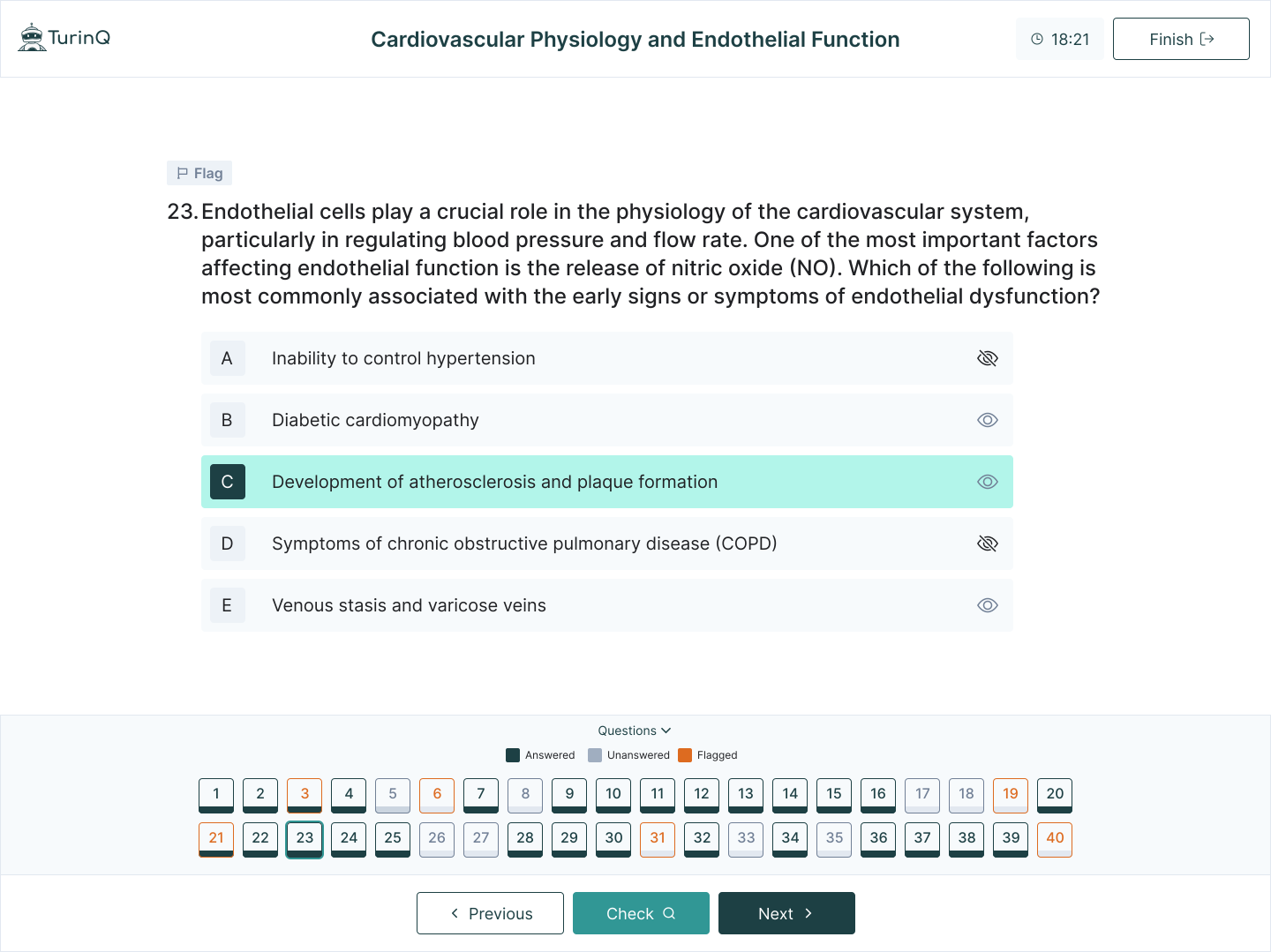
- Speed ≠ quality: ChatGPT drafts quickly, but pedagogy needs structure.
- Assessment-first wins: TurinQ aligns to outcomes, targets Bloom levels, and closes feedback loops.
- Less grunt work, more teaching: Creation, grading, and analytics in one flow—plus LMS export.
Frequently Asked Questions
Does TurinQ replace my judgment as an instructor?
No. It accelerates creation and grading while giving you knobs for rigor and alignment; you retain editorial control.
Can I keep using ChatGPT somewhere in the process?
Absolutely—use it to brainstorm. Then use TurinQ to ground, align, export, and analyze.
What if I teach essay-heavy courses?
Leverage open-ended prompts and AI-assisted scoring for faster, more consistent feedback, especially at higher Bloom levels.
Is there value for small classes?
Yes—item quality and feedback speed matter regardless of enrollment. AI Insights helps you tailor office hours and remediation.
Table of Content
Recent Posts



Shapes Flashcards

Number Flashcards

Colors Flashcards
