
Medical School Exam Prep (2025): Anatomy & Pharm with AI
Medical School Exam Prep (2025): Anatomy & Pharmacology with AI — Why TurinQ Beats Mindgrasp
Summary
- Med school is heavy: dense texts, visuals, and drug tables. AI can simplify complex topics and turn visual materials into quizzes so you can practice, not just skim.
- Mindgrasp leans summary-first; TurinQ is assessment-first—Bloom-aligned quizzes, case prompts, and targeted review for real exam readiness.
- Fast path: build a question bank from PDFs/notes, generate quizzes from YouTube lectures & images, then use analytics to spot gaps and plan next steps.
Why summaries aren’t enough for med school
Anatomy and pharmacology demand application: labeling from netter-style images, tracing nerve lesions to deficits, and mapping drug mechanisms → effects → adverse events. Summary-only study feels productive, but it rarely trains the exam behaviors you’re graded on. TurinQ’s approach is to push beyond gist into Bloom levels (remember → apply → analyze → evaluate).
TurinQ vs. Mindgrasp (for med students)
What you need | Mindgrasp (summary-first) | |
Anatomy from images | General takeaways | Visual → Quiz: identify structures, tag variants, analyze lesions |
Pharmacology mastery | Lists & summaries | Mechanism → Indication → Contra/AE with Bloom-aligned prompts |
From sources to bank | — | |
Lectures to practice | Skim | YouTube → notes + quiz; drill what was actually taught |
What to study next | Manual guesswork | AI Insights: detect knowledge gaps & personalize plans |
Mindgrasp’s own positioning in our plan highlights summaries; this is precisely where TurinQ’s mastery loop makes the difference.
Fast workflows for Anatomy & Pharm
A) Anatomy: image-driven practice (brachial plexus example)
Import atlas pages or lab photos (clear, edge-to-edge).
Generate label-in/place and lesion analysis items (e.g., “Injury at the posterior cord → expected motor/sensory deficits?”).
- Promote Bloom level from remember (naming) to analyze/evaluate (clinical pattern matching).
- Bank the best items for weekly reuse.
B) Pharmacology: mechanism-first quizzing (beta-blockers)
Generate item families: mechanism → receptor selectivity → indications → contraindications → adverse effects.
Run a mixed quiz; convert misses into targeted reviews; let AI Insights suggest the next set (e.g., “weak on non-selective β-blockers”).
- Add key YouTube lecture links → instant notes + quiz for reinforcement.

A 30-minute med-school routine (today)
Minutes 0–5: Import one anatomy image and one pharm table (PDF).
5–15: Auto-generate a 12-item mixed set (labels + application cases). Promote 3 items to analysis.
- 15–22: Paste a YouTube mini-lecture; grab notes + 5 quick questions.
- 22–30: Review results; save hardest items to your Question Bank; let AI Insights pick tomorrow’s focus.
Outcome: you leave with evidence of learning, not just highlights.
Ready to prep smarter?
Start with TurinQ for free today!
Ready to move from reading to mastery? Try TurinQ with your handwritten notes lecture and feel the difference in one session.
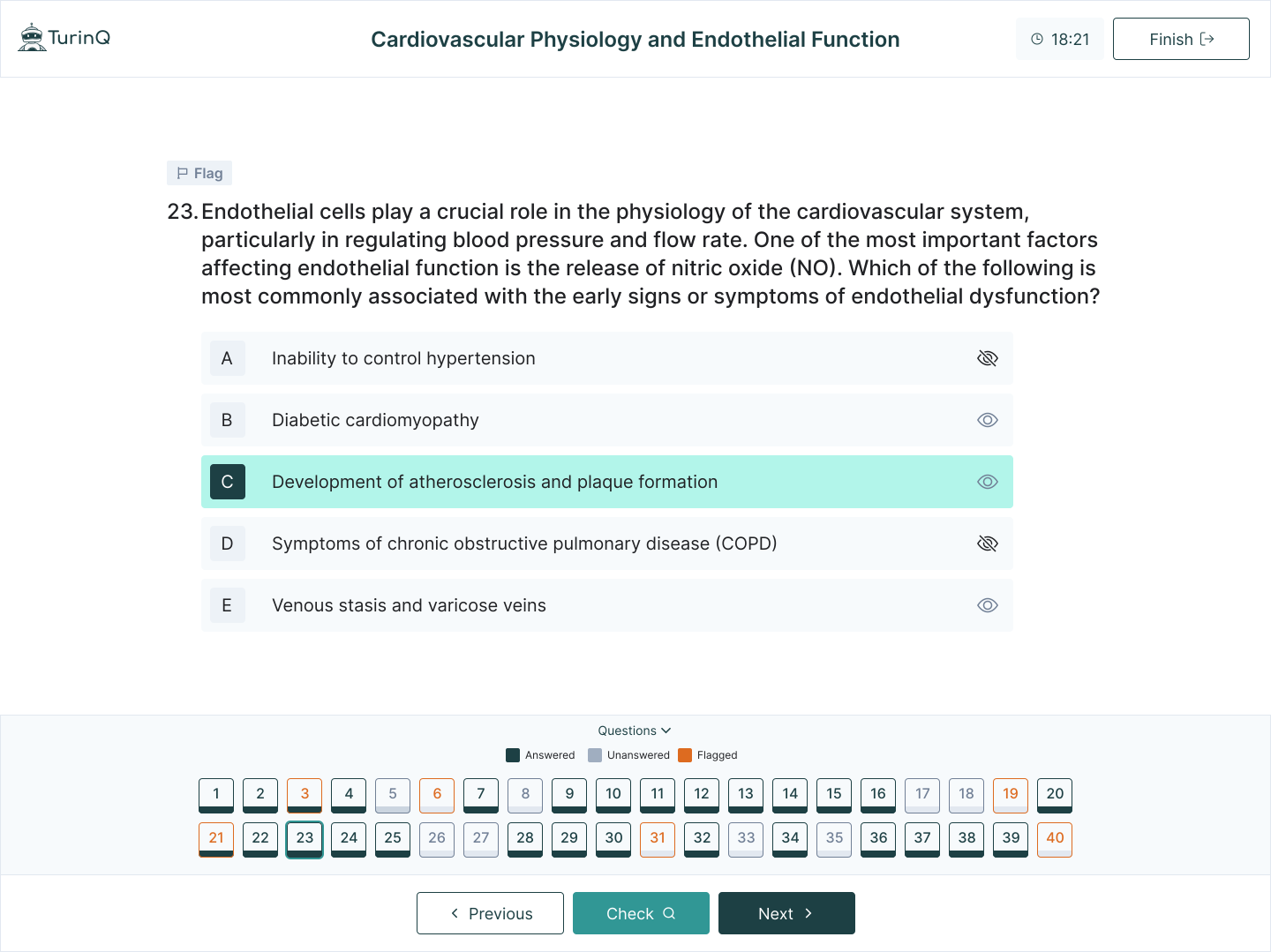
Turn anatomy images and pharm tables into Bloom-aligned quizzes today, then let AI Insights plan what you should tackle tomorrow.
Frequently Asked Questions
Can I study directly from lab photos or scanned atlas pages?
Yes—import visual materials and turn them into label and lesion-logic questions quickly.
How do I avoid shallow recall in pharm?
Map questions to Bloom levels and practice across mechanism → indication → AE → contraindication; let AI Insights steer your next reps.
What about reusing items before NBME/TUS blocks?
Build a Question Bank from PDFs/notes so you can spin unlimited practice sets without re-authoring.
Table of Content
Recent Posts


Shapes Flashcards

Number Flashcards

Colors Flashcards
